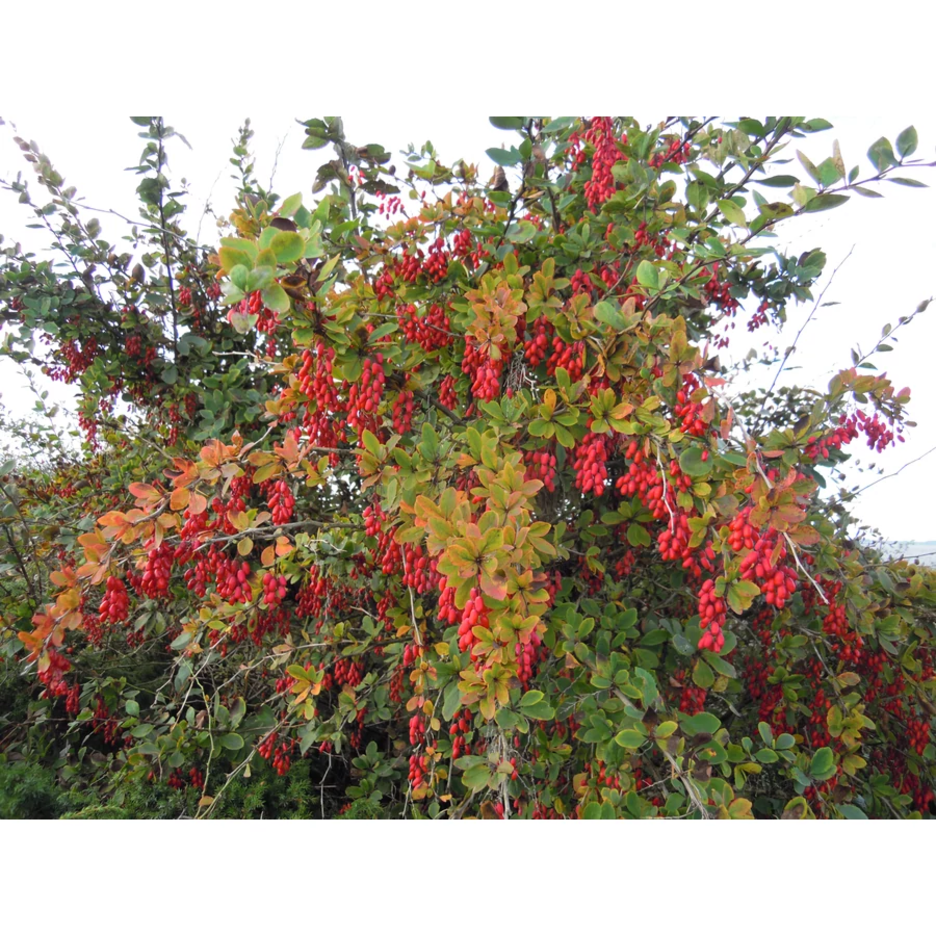
• Thorny bush
• Decorative and medicinal
• Blooms: May–June.
• Fruits ripen: August–September.
• Favorite of birds
Barberry is a shrub that has been cultivated in Europe since ancient times, easily recognizable by its thorny branches and bright red berries. It grew naturally in woodlands, hillsides, and drier areas. Barberry was valued in Europe for its decorative qualities, as well as its fruits and medicinal properties.
Barberries have been grown in monastery gardens since the Middle Ages. Their berries were used to make various syrups, drinks, and folk remedies. The bright berries and dense branches also adorned gardens and protected certain areas from livestock or wild animals.
In manor parks, barberries were usually planted as hedges or ornamental shrub groups. In spring, the plants were adorned with small yellowish flowers, and in autumn, they stood out with bright fruits and reddish leaves.
In rural homesteads, barberries grew near fences, gardens, or paths. The prickly branches were suitable for protective hedges, and the sour berries were sometimes used for food or tea. In some places, people believed that barberries protected the homestead from misfortune.
In towns, barberries were planted in parks and public gardens. They were well-tolerant of pruning and drier conditions, making them suitable for urban environments. In autumn, their bright berries provided a splash of colour even when the weather cooled.
In Eastern Aukštaitija, barberries usually grew on old homesteads, near gardens or along roadsides. Due to their resilience and ability to grow in one place for a long time, they became a permanent part of the homestead.
Today, barberries remain popular ornamental shrubs, valued for their colorful leaves, bright fruits, and ability to form dense hedges.