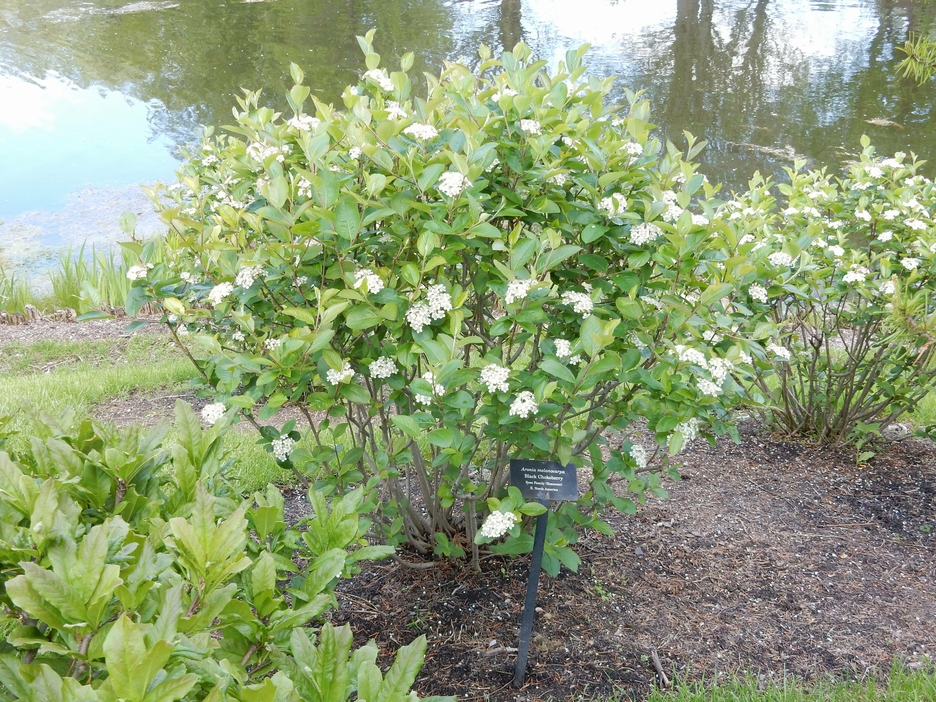
• Fruit bush
• Medicinal and ornamental
• Blooms: May–June.
• Fruits ripen: August–September.
• Loved by birds and pollinators
The black chokeberry is a shrub native to North America that spread to Europe in the 20th century for its nutritious fruit and decorative appearance. Chokeberries quickly became popular in gardens and homesteads because they were frost-resistant and easy to care for.
In estates and experimental gardens, chokeberry began to be grown as a valuable fruit plant. The dark berries were considered beneficial to health, so juices, syrups and jams were made from them. In autumn, the bushes additionally decorated the surroundings with their reddened leaves.
In rural homesteads, chokeberries became especially popular in the second half of the 20th century. They grew on the edges of gardens, near fences, or as individual bushes in yards. People appreciated their abundant harvest and undemanding growth. The berries were often picked after the first frost, when they became less bitter.
In towns, chokeberries were also planted in public gardens. In spring, they were adorned with white blossoms, and in autumn, with black fruits and bright leaves. Due to their resistance to frost, the bushes were well suited to the Lithuanian climate.
In Eastern Aukštaitija, chokeberry often grew near homesteads and in gardens. In many places, it became a common fruit shrub along with currants or gooseberries. The berries were used for juice, wine, and various homemade products.
Today, the black chokeberry is still valued for its healthy fruit and decorativeness. It is considered one of the most unpretentious fruit shrubs, suitable for both traditional gardens and modern homesteads.