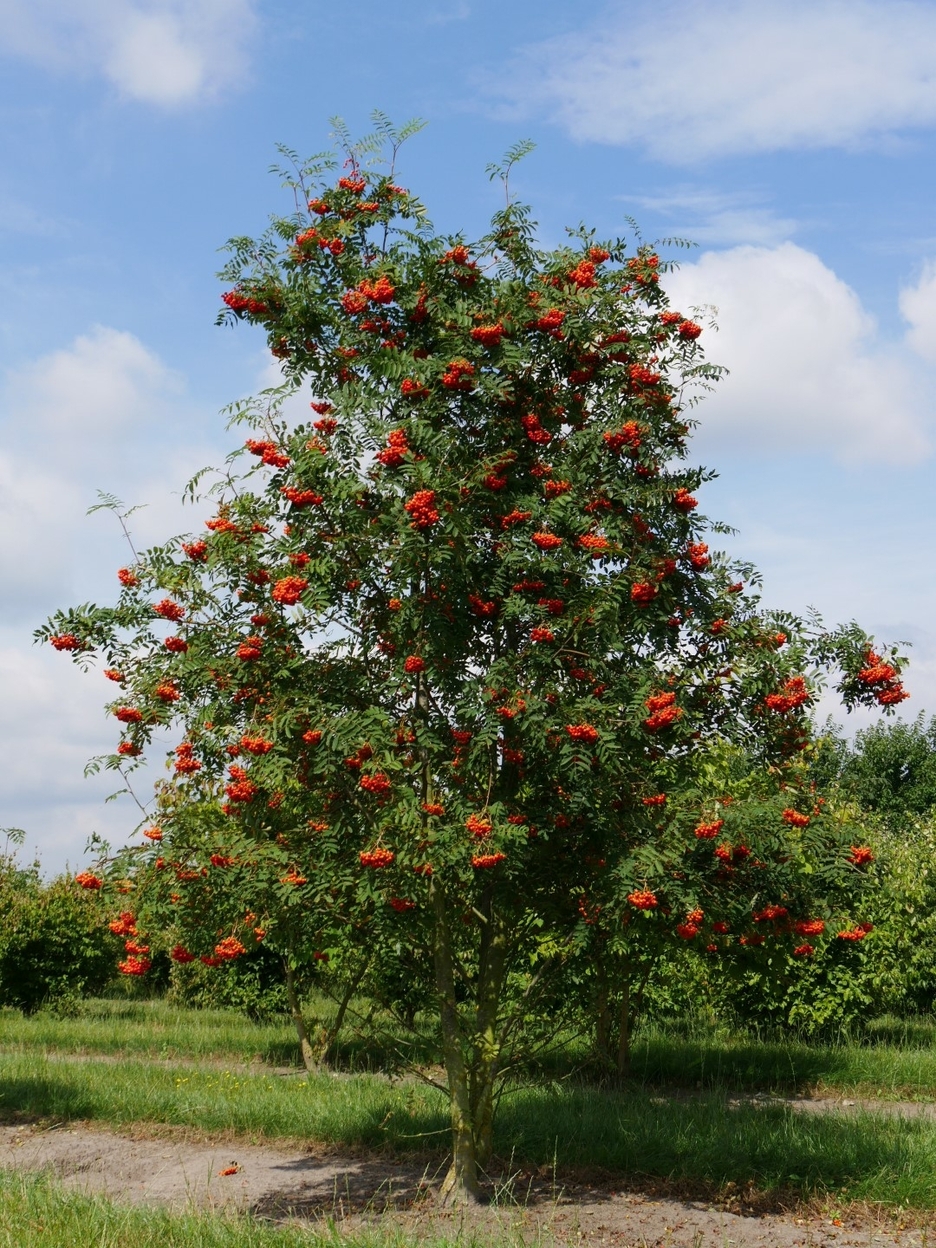
• Tree or large shrub
• Decorative and medicinal
• Blooms: May–June.
• Fruits ripen: August–September.
• Favorite of birds
Rowan is a tree that has been growing in Europe since ancient times, well known for its bright orange or red berries. It grows naturally in forests, woodlands, hilly areas and around homesteads. Rowan trees have long been valued not only for their decorativeness, but also for their fruit and symbolic significance in folk culture.
In ancient times, rowan was often considered a protective tree. It was believed to protect against misfortune and evil spirits, so it was planted near houses, gates, or barns. In some parts of Europe, rowan twigs were used in various customs and ceremonies.
In the gardens of manors and monasteries, rowan trees were valued for their decorative appearance. In spring, the trees were adorned with white inflorescences, and in autumn they stood out with bright clusters of berries. They often grew in parks, alleys or on the edges of gardens together with other local trees.
In rural homesteads, the common rowan was one of the most common trees. It grew near houses, along roads, or on the edges of nurseries. The bright berries remained on the branches for a long time, even after the first frosts, so the tree decorated the environment both in autumn and winter. People collected the fruits for tea, jam, or various folk remedies.
In cities, rowan trees were often planted in parks, schoolyards, or along streets. They were popular for their cold resistance and ability to grow in a variety of conditions. In addition, the berries attracted birds, so the trees brought life to the urban environment.
In Eastern Aukštaitija, rowan trees were a very common part of the landscape. They grew not only on homesteads, but also on the edges of forests, near fields, or along roadsides. Thanks to their bright berries, the tree became one of the most recognizable signs of autumn.
Today, the common rowan is still valued as an ornamental and native tree. Its bright berries, hardiness, and connection to ancient traditions allow the rowan to remain an important part of the Lithuanian landscape to this day.