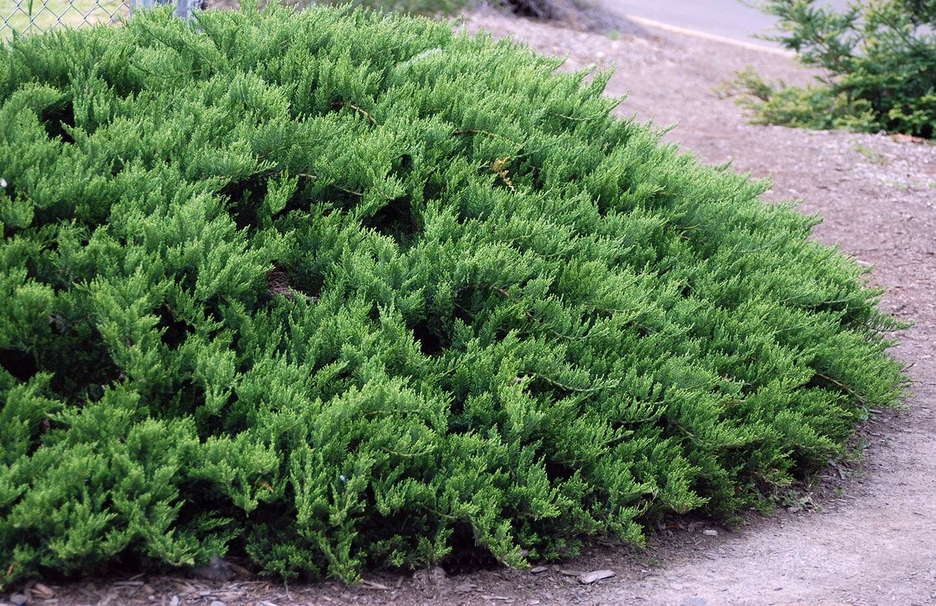
Cossack juniper is a low, spreading conifer that has long been cultivated in ornamental plantings due to its dense branches and ability to grow in barren places. This species is naturally distributed in the mountainous regions of Southern and Central Europe and Western Asia. In Europe, Cossack juniper began to be widely cultivated in the 18th–19th centuries, when ornamental conifers became popular in gardens and parks.
In manor parks, Cossack junipers were usually planted on slopes, in rock gardens, or along paths. Low, dense bushes helped to cover the soil surface and provided the gardens with neat greenery throughout the year. Due to their grayish-green needles, junipers went well with other ornamental plants and stone compositions.
In the context of monasteries and historic gardens, junipers were sometimes valued for their symbolic meaning. Evergreen plants were associated with vitality and endurance, and were therefore planted to decorate cemeteries or more peaceful garden areas.
Cossack junipers became widespread in rural homesteads later than ordinary local junipers. They were most often planted near houses, along paths or on slopes, where other plants had difficulty growing. Due to their undemanding nature to soil and resistance to frost, these junipers adapted well to the Lithuanian climate.
In towns, Cossack junipers were popular in public gardens. They grew in parks, squares, near administrative buildings or residential buildings. The dense thickets prevented weeds from growing quickly, so the plant was considered practical and easy to maintain.
In Eastern Aukštaitija, Cossack junipers were mostly grown for decorative purposes near homesteads or cemeteries. They grew well in drier areas, on sandy soil, and could survive for a long time with little or no maintenance.
It is important to know that the Cossack juniper is a poisonous plant. The substances contained in its twigs and berries can be dangerous to humans and animals, so the plant should be planted with caution, especially where children visit.
Today, the Cossack juniper is still valued as an ornamental conifer. Due to its hardiness, dense crown, and evergreen appearance, it is still used in homestead plantings, rock gardens, and in the restoration of historic gardens.