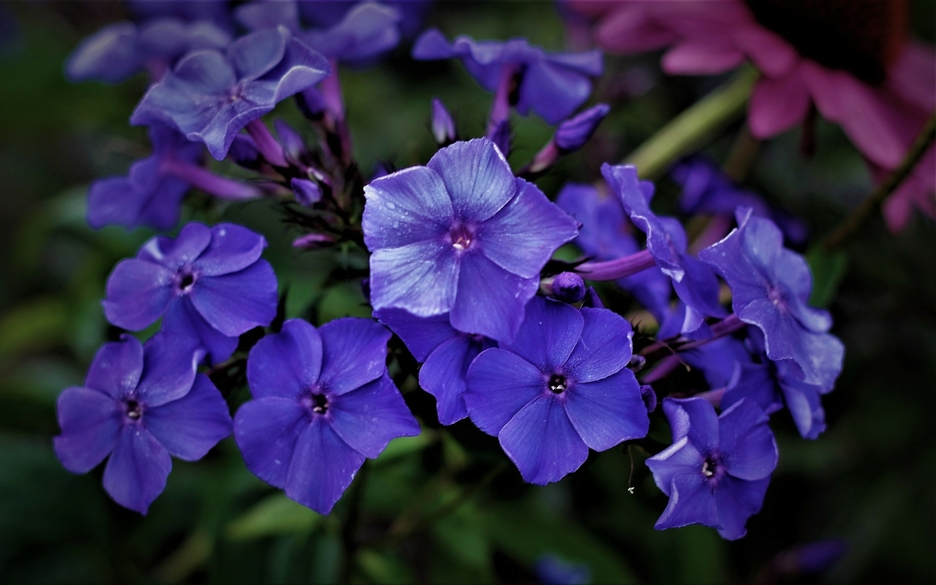
Phlox is one of the brightest and longest-blooming traditional garden flowers. In Eastern Lithuania and some other areas of Lithuania, phlox was called "karkliukas". This plant is native to North America, where it grows naturally in wetter meadows and forest edges. Phlox came to Europe in the 18th century, when many new garden plants were brought from the New World. They soon became popular in manor gardens, and later spread to town and village homestead gardens.
In manor gardens, phloxes were loved for their abundant and long flowering. In the second half of summer, they are adorned with large panicles of fragrant flowers - white, pink, purple or various intermediate shades. When many other flowers have already begun to bloom, phloxes retain their colorful inflorescences for a long time, therefore they became one of the most important accents of the end of summer. In the 19th century, various varieties of them were bred, further strengthening the popularity of this plant.
In village nurseries, phloxes quickly took root and became one of the favorite flowers of homesteads. They were usually grown in the middle or at the end of the nursery, where the taller stems could rise above other plants. The fragrant inflorescences not only decorated the environment, but also filled the nursery with a sweet summer scent. Phloxes continued to bloom after peonies and other earlier flowers, so the nursery remained colorful longer.
Phlox were also very popular in urban environments. They bloomed in flower beds near residential buildings, schools, or public buildings. Due to their long flowering and bright colors, phlox were often picked for bouquets or used for holiday decorations. In addition, they could grow in one place for many years and did not require complex care.
In Eastern Aukštaitija, phlox was one of the most common traditional nursery flowers. In old homesteads, it often bloomed together with peonies, lilies, or columnar roses. Due to its hardiness and easy propagation, phlox quickly spread to various homesteads and eventually became an integral part of late summer nurseries.
Today, the phlox remains a popular garden plant. Although many different varieties are now grown, the old forms are still associated with traditional country nurseries. In the restoration of old farmsteads, phloxes are valued for their long flowering, fragrance and ability to create a colorful, lively summer nursery atmosphere. On warm summer evenings, the fragrant phlox flowers are often visited by sphinxes - large butterflies that can hover in the air like small hummingbirds.