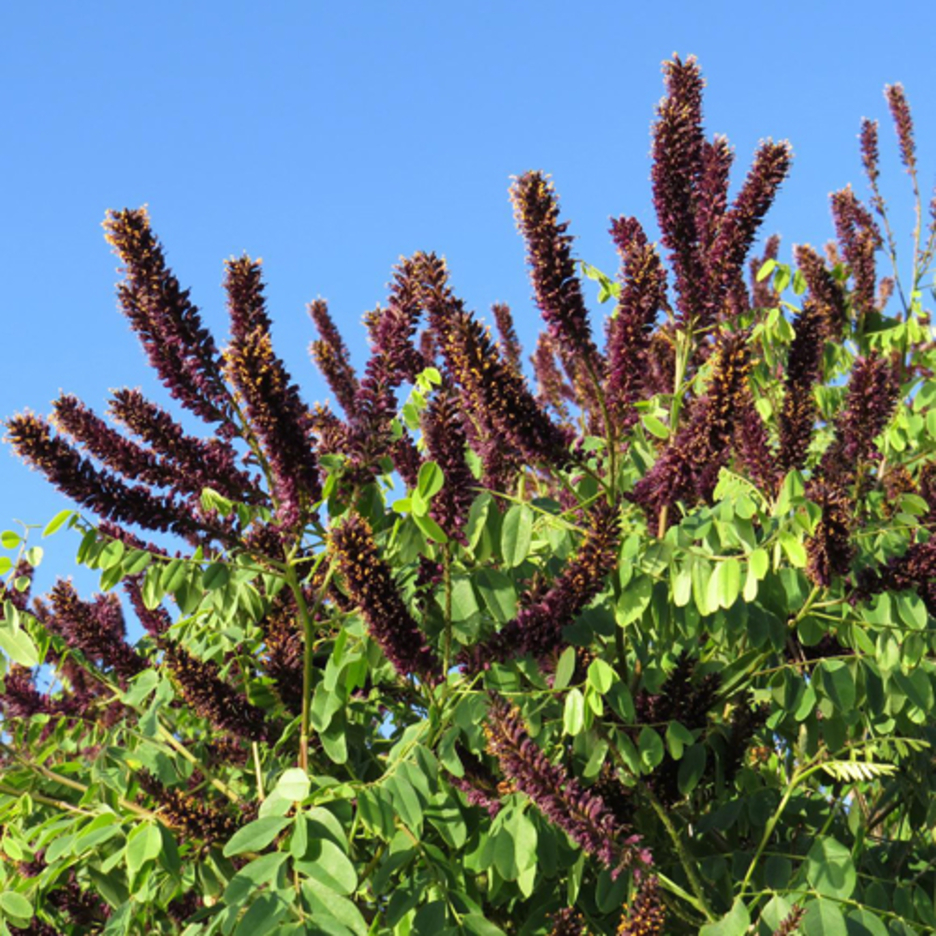
• Perennial ornamental shrub
• Ornamental and woody plant
• Blooms: June–July.
• Favorite of pollinators
Amorpha shrub is an ornamental shrub native to North America, brought to Europe in the 18th century as an exotic garden plant. Due to its unusual dark purple inflorescences and feathery leaves, Amorpha quickly became popular in manor parks and botanical gardens. Later, it began to be grown in town parks and larger country estates.
In manor gardens, amorphophallus was usually planted in parks, along paths or water bodies. The lush bushes gave lightness to the greenery, and the inflorescences that appeared in early summer attracted bees and other insects. Due to their decorative appearance, amorphophallus was often used as background plants in mixed plantings.
In rural homesteads, amorpha was rarer than traditional native shrubs, but was grown in some places as an ornamental and unusual plant. It was usually planted at the edges of nurseries or near fences, where the broad bushes could spread freely.
In cities, amorphophallus was used to green public spaces and slopes. Because the plant is drought-tolerant and grows quickly, it was suitable for less-maintained areas. The dense bushes also helped to stabilize the soil.
In Eastern Aukštaitija, amorpha was never very common, but in some places it grew near older homesteads or former manors. Due to its resilience, it sometimes survived even in abandoned places.
Today, the shrubby amorpha is valued for its decorativeness and ability to attract pollinators, but in some places it is considered a rapidly spreading alien plant. Nevertheless, it remains an interesting plant in historic green spaces, reminiscent of the traditions of old parks and gardens.