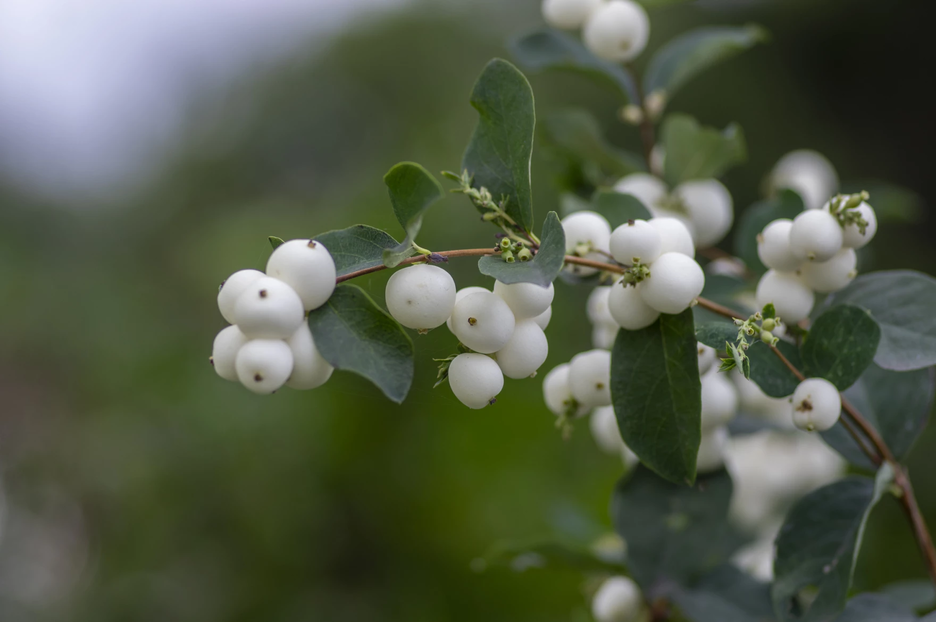
• Perennial ornamental shrub
• Blooms: June–July.
• White decorative berries persist until winter
• Resistant to urban conditions
White bearberry is an ornamental shrub native to North America, which was introduced to Europe in the 18th and 19th centuries. It became popular for its white berries, which remain on the branches even after the leaves have fallen. Due to its hardiness and unpretentiousness, this shrub quickly spread to gardens, parks, and urban green spaces.
In manor gardens, white-berry bearberries were usually planted in hedges or mixed ornamental plantings. The small pink flowers were not particularly showy, but the white berries that ripened in autumn gave the gardens a distinctive look.
In rural homesteads, bearberries often grew along fences or plot boundaries. The dense bushes filled the space well and did not require complex care. Children found the white berries interesting because of their unusual appearance, although they were not edible.
In urban areas, white-berry bushes were valued for their resistance to dust, pruning, and frost. They were planted in parks, near schools, or around apartment buildings as easy-care ornamental shrubs.
In Eastern Aukštaitija, white-berry bushes usually grew on the edges of homesteads and in hedges. Due to their ability to spread rapidly, they sometimes formed dense thickets.
Today, the white-berry bearberry is still used in ornamental plantings, especially where hardy and undemanding shrubs are needed.