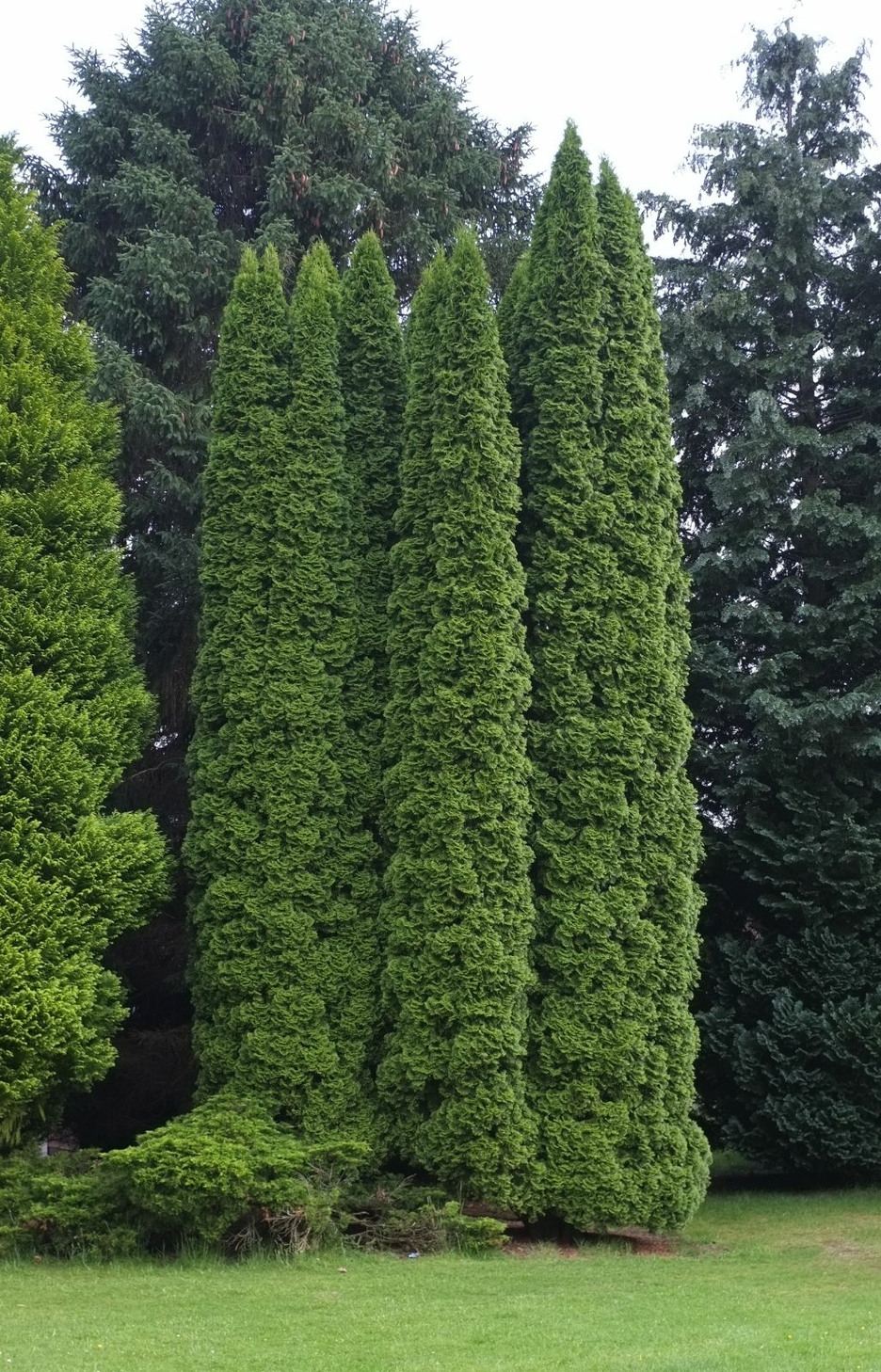
Western thuja is one of the most widespread ornamental conifers in Europe, originating from North America. It was brought to Europe in the 16th century and soon began to be grown in the gardens of manors and monasteries. Due to its dense green crown and ability to tolerate pruning well, thujas eventually became one of the most important ornamental plants in landscaping.
In monastery gardens, western thujas were often planted in quieter areas of courtyards or along paths. The evergreen trees provided order and greenery to the gardens even in the cold season. Due to their regular shape, thujas were suitable for closed and symmetrical garden compositions.
Thujas became especially popular in manor parks in the 18th–19th centuries. They were planted in alleys, at entrances, in representative flower beds, or formed into high hedges. The dense branches provided excellent protection from the wind and created more enclosed spaces in parks. In some places, thujas were pruned into various decorative shapes.
Western thujas became especially popular in rural homesteads in the 20th century. They were most often planted near houses, along fences or at the edges of yards. People valued them for their unpretentiousness and evergreen appearance. Dense hedges provided privacy and protected yards from dust and wind.
Thujas became one of the most common ornamental plants in urban environments. They grew near schools, churches, administrative buildings, and apartment buildings. Their neat appearance and ability to maintain their shape for a long time led to their great popularity in public gardens.
In Eastern Aukštaitija, western thujas were especially common near homesteads and cemeteries. They were often planted in pairs near gates or along paths. Due to their resistance to frost and ability to remain green all year round, thujas have become one of the most common parts of traditional landscaping.
Today, the western thuja remains one of the most commonly planted ornamental conifers in Lithuania. Although sometimes considered an overly common plant, it is still valued for its hardiness, dense crown, and ability to create a green environment in all seasons.