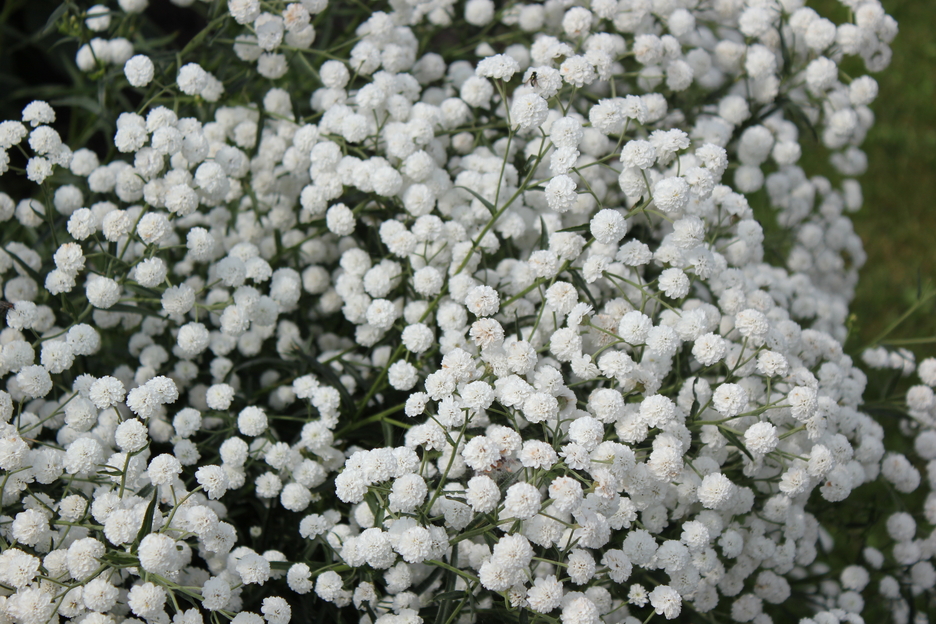
Yarrow is an old and long-known perennial flower in Europe, valued both for its medicinal properties and for its light, openwork appearance. This species is naturally widespread in many parts of Europe - in wetter meadows, coasts or forest edges. However, it has long since found its way into gardens and nurseries, where it has been loved for its small white flowers and natural, meadow-like appearance.
Yarrow was first cultivated in monastery gardens as a medicinal plant. Its name is associated with its ability to induce sneezing – crushed parts of the plant were sometimes used in folk medicine. Like other yarrows, this plant was considered to have medicinal properties. Later, as the culture of ornamental flower gardens spread, its delicate and beautiful appearance began to be appreciated.
In manor gardens, yarrow was usually grown at the edges of flower beds or among brighter perennial flowers. Its small white inflorescences gave lightness and brightness to compositions. Due to this property, yarrow was often combined with peonies, fireweed, phlox or other flowers of richer colors.
In village nurseries, yarrow was also quite popular. It usually grew on the edges of the nursery or among other flowers, where it could form light clusters decorated with white flowers. Its unpretentiousness and long flowering period meant that yarrow was well suited to traditional nurseries. Its small flowers gave the environment a natural look and reminded of the vegetation of fields and meadows.
In urban areas, yarrow was also planted in small flower beds near houses or other decorative areas. Due to its delicate white flowers, it was often used in bouquets, where it easily combined with other flowers.
In Eastern Aukštaitija, yarrow was a fairly common flower in traditional nurseries. It often grew together with other perennial flowers and eventually formed small flowering patches on the edges of the nursery. Its easy spread and resistance allowed this plant to easily establish itself in homesteads.
Today, yarrow is still grown in gardens and flower beds. Although it is often considered a simple perennial, it is valued in traditional nurseries for its ability to soften flowerbed arrangements and give them a natural, uncluttered beauty.